Northern NSW Local Health District Year in Review
Learn about our activity, performance, communities, trends and key achievements in this snapshot of the 2024-25 financial year.

Activity and performance
Our activity
Our hospitals, community health centres and HealthOne sites experienced continued demand in 2024-25.









Our performance
Our District's Service Agreement with NSW Health sets the direction, responsibility and accountability for our delivery of high quality, effective healthcare services that promote, protect and maintaining the health of the Northern NSW community. We performed at better than target in a range of measures including:
- overall patient experience index – adult admitted patients and emergency patients
- discharged from ED within four hours
- admitted to ED short stay unit within four hours
- ED stay no greater than 12 hours
- breast screen participation rate.
First-class care for our communities
The Bureau of Health Information's Adult Admitted Patient Survey 2024 also showed 93% of patients rated their overall care in hospital as 'very good' or 'good', which was slightly higher than the NSW rate (92%).
Achievements and initiatives

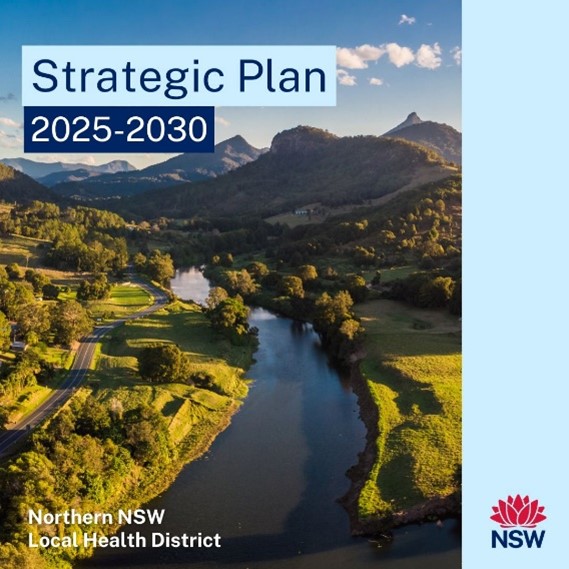
In 2024-25, we continued to deliver on our commitment to excellent care for our communities. This year we introduced our Strategic Plan 2025–2030, setting a clear direction for the next five years. It was the outcome of strong engagement with staff, partners and community members and has a vision of:
Together, we deliver excellent care now for a healthier community tomorrow.
The plan is built around six Strategic Priorities:
- Workforce – a supported, inclusive and engaged workforce
- Partnerships – integrated services and health outcomes are enhanced through strategic and targeted partnerships
- Service delivery – accessible, high-quality and culturally safe care is sustainably delivered
- Efficiency and sustainability – our corporate processes are transparent, efficient, accountable and future-focused
- Patient experience – patients, carers and communities have positive experiences and outcomes that matter to them
- Assets and technologies – fit-for-purpose physical and digital assets and technologies.
The achievements and initiatives that follow show how these priorities are being put into practice through our annual Operational Plan. Each reflects our ongoing focus on improving health outcomes and experiences for the people of Northern NSW.
Our District
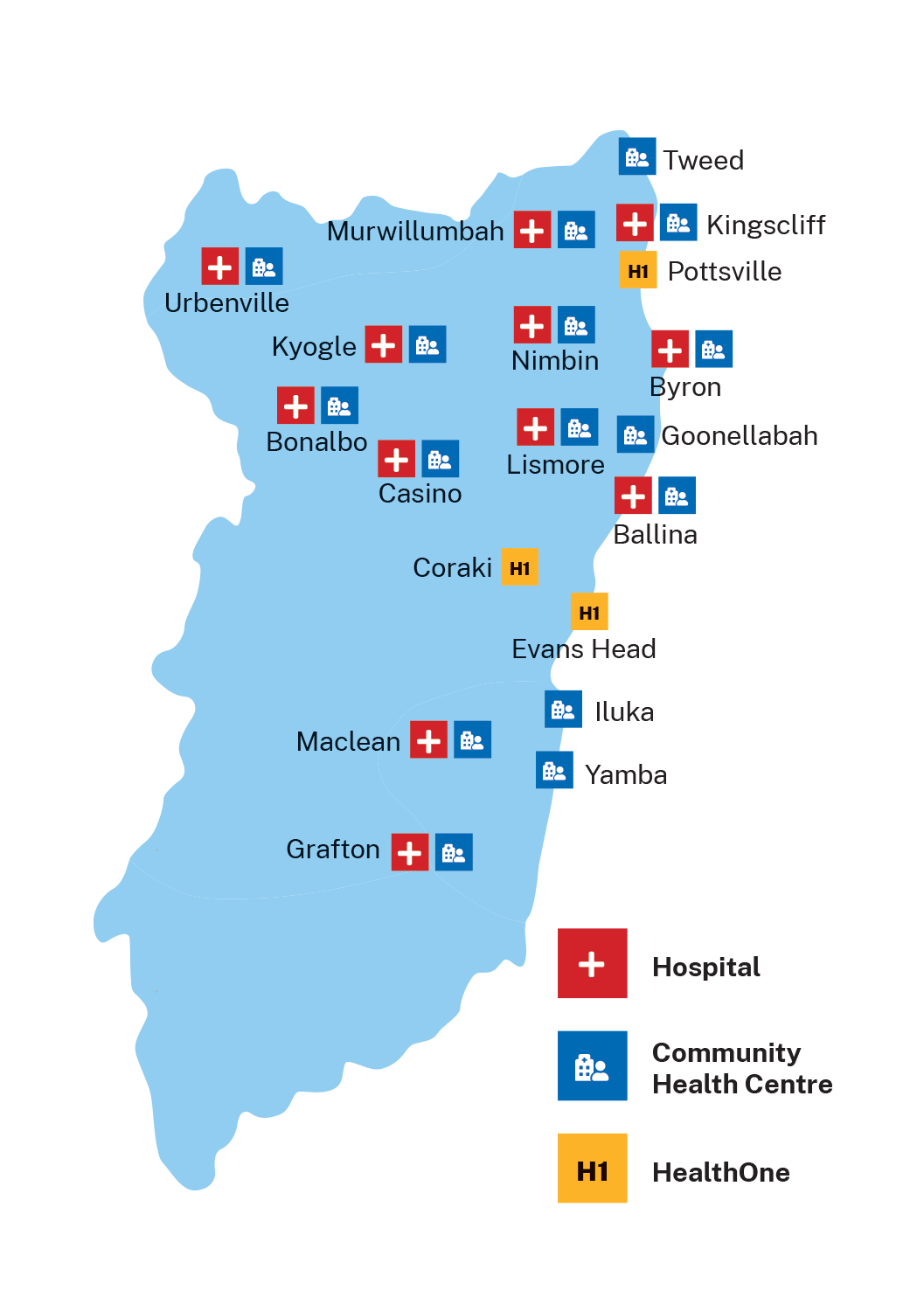
Through eight Hospitals, four Multi Purposes Services, 17 Community Health Centres, three HealthOne services and other facilities, we deliver public health services to more than 314,000 people who live in the Northern Rivers region of NSW.
Our geographic area covers 20,732 square kilometres, spanning eight local government areas from Nymboida in the south to Tweed Heads in the north and west to Tabulam.
These are the traditional lands of the Bundjalung, Githabul, Gumbaynggirr and Yaegl nations.
We work with community members, consumers and organisations to plan, deliver and evaluate healthcare, leading to better quality, safety and patient outcomes.
Our partner organisations include Healthy North Coast Primary Health Network, Bond University, Griffith University, Southern Cross University, TAFE NSW and the University Centre for Rural Health.
- Our people
-
We employ 7,319 staff across 32 sites.
- 4.1% identify as Aboriginal and/or Torres Strait Islander.
- 75% are female.
- 44% work part time, 40% work full time and 16% work casually or through agencies.
- 29% are over the age of 55 – like our community, our workforce is aging.
Clinical staff- Allied health 10%
- Medical 10%
- Nursing 50%
- Oral health 1%
- Other professionals, paraprofessionals and support 3%
- Scientific and technical clinical support 2%
Corporate staff- Clinical support: 13%
- Corporate services: 4%
- Hotel services: 6%
- Maintenance and trades: 1%
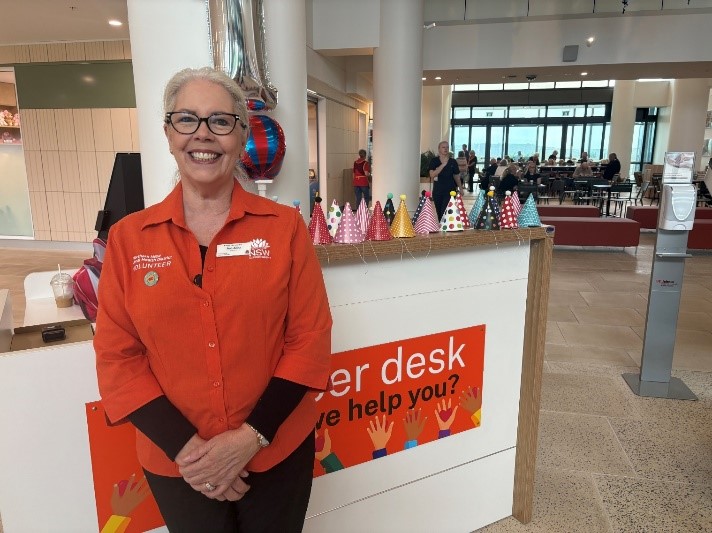
VolunteersWe saw strong growth and engagement across our Healthcare Helper volunteer program, with 93 active volunteers supporting sites from Grafton to the Tweed. Tweed Valley Hospital welcomed new Patient Companion roles and began onboarding its second cohort of Healthcare Helpers. Feedback from our first volunteer survey was overwhelmingly positive, with 100% of respondents feeling safe and recommending the program.
- Our community
-
From coastal towns to hinterland villages, our region brings together people from all walks of life. It’s a community rich in culture, creativity and, owing to natural disasters, resilience.
- 314,905 people live in the region we service.
- 6.4% identify as Aboriginal and/or Torres Strait Islander, significantly more than the NSW average of 4.2%.
- 12.9% of our community was born overseas, significantly less than the NSW average of 29.3%.
- By 2041, our population will grow 8%, attracted especially by the northern coastal areas of Ballina, Byron and Tweed.
- In the same timeframe, there will be significant growth in older age groups, with 25% of our community aged 70 years and more.
- There will be little to no growth in the younger population during the same period.
Health behaviours and risksMany factors influence our community’s health and wellbeing. Compared to the rest of NSW, our community has:
- lower levels of educational attainment
- lower median income, lower rates of full-time employment and high levels of unemployment
- high levels of rental and housing stress
- poor internet access and telephone service.
They experience poorer health outcomes and have higher rates of health risks compared to NSW, including:
- higher rates of adults smoking, overweight and obesity in adults and children, and adults exceeding the Australian alcohol guidelines
- higher rates of mental health conditions, potentially preventable hospitalisations and presentations to emergency departments
- better than the NSW average for adults eating the recommended daily intake of fruit and vegetables and physical activity in children.
Community Advisory Groups
We continued to strengthen our commitment to healthcare delivered in partnership with the community through the vital work of our community advisory groups during 2024-25.
More than 60 advisory group meetings were held across the District during the year, providing feedback and advice into patient experience, service planning and delivery, health literacy, prevention initiatives and community engagement.
This year, we launched Engage Northern NSW, an online platform making it easier for community members to share their ideas and have their say in shaping local health services. In its first four months of operation, the platform hosted 20 surveys, inviting valuable input from across the region.
Feedback collected through Engage Northern NSW directly informed our NNSWLHD Strategic Plan 2025–2030, helping ensure the voices of patients, carers, community members and staff are reflected in our long-term vision.
As our region continues to grow and evolve, the contribution of community advisory groups will be more important than ever. With an ageing population and increasing demand for services, we remain committed to partnering with the community to design solutions that are sustainable, equitable and person-centred.
- Our strengths and challenges
-
As a regional health service, our strengths and challenges are different to those of our metropolitan counterparts.
- The health outcomes of our community are poorer compared to metropolitan areas.
- We face different workforce challenges and shortages, often relying more extensively on locum and agency staff.
- Fewer specialist services and primary care after hours options are available in smaller towns, putting pressure on emergency services.
- Health services in our centres are expanding and offer opportunities for increasing specialisation.
- Opportunities for using new health and communication technologies in patient care have increased.
Top health issues in 2024-25
- Chronic disease and ageing-related conditions, including dementia and heart disease on people 65 years and older.
- Increasing complexity of needs placing additional pressure on the system.
- Poor health behaviours such as risky alcohol consumption, smoking during pregnancy, physical inactivity, overweight and obesity.
- High cancer incidence and mortality.
- High rates of hospitalisation for Type 1 diabetes.
- Both the suicide death rate and suicide attempt prevalence in youth are considerably higher than the NSW average, with Clarence Valley having particularly high prevalence of suicide.
- Mental health – in addition to chronic illness, there are higher levels of psychological distress in adults than NSW, higher rates of mental health-related presentations to Emergency Departments and higher rates of intentional self-harm hospitalisations. *
- Public health experienced a busy respiratory illness season during 2024-25 and managed multiple measles outbreaks.
* Additional source: Healthy North Coast
The District in detail
Learn more about Northern NSW Local Health District. Visit our key documents page to see how we provide care for our communities.